
Branded extract vs. generic “ashwagandha extract”
A named, branded extract such as KSM-66® points to a specific, documented manufacturing process. A label that only says “ashwagandha extract” discloses less about sourcing and standardization.
Buying guide
The label details worth reading before you buy: extract type, standardization, labeled dosage, and what real transparency looks like.
Understanding the terms
None of these require special expertise — only reading the label as closely as the marketing.
A named, branded extract such as KSM-66® points to a specific, documented manufacturing process. A label that only says “ashwagandha extract” discloses less about sourcing and standardization.
Withanolides are compounds used to standardize ashwagandha extracts. When a label states a withanolide percentage, it is describing the extract’s standardization, not promising a specific personal outcome.
A “proprietary blend” label can combine several ingredients under one total weight without stating how much of each is present. A fully disclosed single-ingredient dose is easier to evaluate.
Third-party testing checks a product against its label claims and screens for contaminants. Its availability — not its presence on a badge — is what is worth confirming directly with a brand.
Regulation, in plain terms
In the United States, dietary supplements are regulated differently from drugs: the FDA does not review or approve them for safety or effectiveness before they reach shelves. That makes label transparency and third-party testing more meaningful signals than badges or marketing language alone.
For an independent overview of how supplements are regulated and how to evaluate marketing claims, read the NIH Office of Dietary Supplements overview and NCCIH’s guidance on using dietary supplements wisely.
Common questions
Educational context only—not medical advice or a substitute for guidance from a qualified healthcare professional.
No. Dietary supplements do not go through federal pre-market approval for safety or effectiveness the way drugs do. Manufacturers are responsible for ensuring their products are safe and labeled truthfully, and regulators can take action after a product is already on the market. A supplement label suggesting federal sign-off it does not have should be treated with caution.
It most often refers to studies conducted on a specific branded ingredient, such as a named extract, rather than the finished product on the shelf. Reading which ingredient and which studies are referenced is worth doing before assuming the claim applies to a whole formula.
Ashwagandha supplements can be made from the root alone or from a combination of root and leaf. The two are not interchangeable, and a label should state which plant part or parts were used.
At minimum: the plant part used, the extract name if branded, the labeled milligram dose per serving, the capsule or serving count, and any companion ingredients such as black pepper extract / piperine, each listed with its own amount rather than folded into a blend.
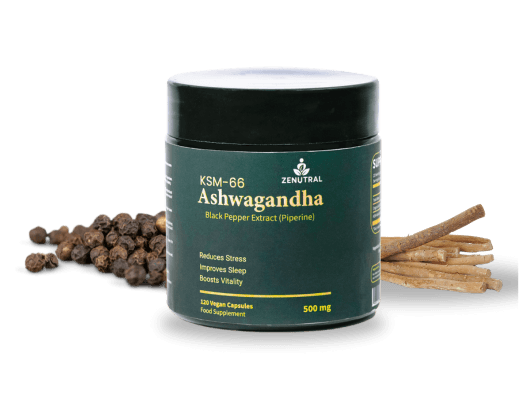
Zenutral's current formula lists KSM-66® Ashwagandha root extract as its primary ingredient and Black Pepper Extract / Piperine as its companion, labeled at 500 mg per serving in a 120-capsule bottle, with no proprietary blend.
See the formula
Explore Zenutral’s fully disclosed KSM-66® Ashwagandha formula or return to the full guide library.